
Predicting Earth’s Future: How AI is Enhancing Climate Modeling and Environmental Forecasting
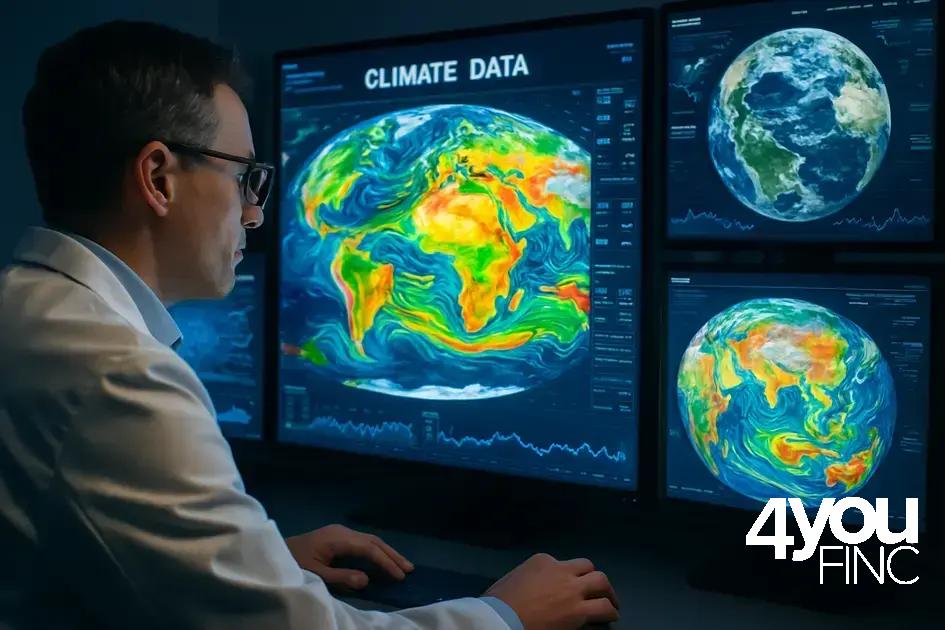
AI in Climate Modeling is transforming how we predict and understand environmental changes, making forecasts more accurate and timely.
If you feel like your paycheck barely makes it into your account before disappearing, you’re not alone. Many people face this struggle—and it’s not for lack of effort. This post offers a straightforward look at what to do when money runs low, debts pile up, and stress sets in.
Without promising miracles, I explain where to start: understanding where your money is going, organizing the essentials, and cutting what you can (even if it seems small). I share practical tips on renegotiating debts, dealing with banks, and what to avoid (spoiler: easy loans don’t always help).
I also discuss mindset: getting out of the red isn’t just about numbers—it’s about developing the habit of looking at your finances without guilt and striving to improve little by little.
And I emphasize: even on a low income, a fresh financial start is possible. Step by step, with patience and the right information, you can turn your finances around.
AI in Climate Modeling is changing the way we understand our planet’s future. Have you wondered how machines help scientists predict weather or climate events with more precision? This technology’s role is growing, and it’s worth exploring what it means for the environment and for us.
what is AI in climate modeling and why it matters
AI in climate modeling refers to the use of advanced artificial intelligence techniques to improve how we simulate and predict Earth’s climate. Unlike traditional models that rely heavily on complex equations and fixed rules, AI uses data-driven algorithms to analyze vast amounts of environmental data quickly and accurately.
Why AI Matters in Climate Modeling
Climate systems are complex and involve numerous interacting factors like the atmosphere, oceans, ice, and land. AI can detect subtle patterns and relationships within this huge dataset that humans might miss. This leads to more accurate predictions of temperature changes, rainfall patterns, and extreme weather events.
Moreover, AI accelerates simulations, making it possible to run multiple scenarios faster than traditional methods. This helps scientists and policymakers assess the impact of different climate actions and prepare effective responses.
Key Advantages of Using AI
- Improved accuracy: AI learns from historical data to reduce modeling errors.
- Speed: Complex climate simulations can be completed much faster.
- Adaptability: AI models can continuously update with new data for real-time forecasting.
By integrating AI, climate scientists can gain better insights, fueling more informed decisions about how to address climate change challenges globally.
how AI improves accuracy in climate predictions
AI improves accuracy in climate predictions by analyzing large sets of complex climate data with advanced algorithms. Traditional climate models often face limits due to the sheer amount of variables and data involved. AI, especially machine learning, can detect patterns from historical climate records that improve forecast precision.
Machine learning and data processing
Machine learning models learn from past climate events, including temperature, precipitation, and atmospheric conditions. They can predict future outcomes by identifying trends that humans or basic models might miss. This capability helps refine predictions for specific regions and timeframes.
Handling uncertainties
AI algorithms manage uncertainty better by running multiple simulations and adjusting predictions based on new incoming data. This adaptive approach reduces errors and increases confidence in forecasts.
Integration with traditional models
AI doesn’t replace traditional climate models but enhances them. By integrating AI insights into physical models, scientists create hybrid models that combine the strengths of both, delivering more reliable and detailed forecasts.
Overall, AI leads to better anticipation of extreme weather events, helping communities prepare and respond more effectively, ultimately supporting efforts to combat climate change.
key AI technologies used in environmental forecasting
Environmental forecasting relies heavily on several key AI technologies to analyze complex climate data and generate accurate predictions. These technologies enable rapid processing and deeper insight into environmental changes.
Machine learning
Machine learning is at the core of AI-driven climate forecasting. It uses algorithms to learn from historical climate data and identify patterns. These models then predict future conditions such as temperature shifts, rainfall, and storm occurrences.
Deep learning
Deep learning, a subset of machine learning, uses neural networks that mimic the human brain. This allows the analysis of vast datasets like satellite imagery or atmospheric data to improve prediction accuracy for weather and climate events.
Natural language processing (NLP)
NLP helps scientists mine large volumes of climate research, reports, and social data quickly. This supports the identification of trends or anomalies and improves situational awareness during environmental events.
Computer vision
Computer vision technology processes images and video data from satellites and drones. It helps monitor changes in ice caps, forests, and oceans in real-time, providing vital information for forecasting models.
Reinforcement learning
This AI technique trains models through trial and error in simulations. It helps optimize climate models by constantly improving their decision-making abilities based on feedback from environmental data.
Together, these technologies create a powerful toolkit that enhances the accuracy and responsiveness of environmental forecasting models.
challenges in integrating AI with climate science
Integrating AI with climate science faces several challenges that must be addressed to maximize its potential. One major issue is data quality and availability. Climate data often comes from various sources like satellites, weather stations, and ocean buoys, but it can be incomplete or inconsistent. AI models need high-quality, comprehensive datasets to deliver reliable predictions.
Complexity of climate systems
Climate systems are highly complex and involve many interacting variables. Modeling these interactions accurately with AI requires advanced techniques and deep domain knowledge, which can be difficult to integrate properly.
Computational demands
Training AI models with climate data demands significant computational power. Running simulations and updating models in real-time is challenging due to the volume of data and the complexity of calculations.
Interpretability and trust
Many AI models, particularly deep learning ones, operate as “black boxes,” making it hard for scientists to understand how decisions are made. This lack of transparency can limit trust in AI-driven climate forecasts.
Ethical and policy concerns
The use of AI in climate science also raises ethical questions such as data privacy and how the forecasts might influence policy decisions. Ensuring responsible deployment is essential.
Addressing these challenges requires collaboration between computer scientists, climate experts, and policymakers to ensure AI tools are effective, trustworthy, and aligned with global climate goals.
real-world applications of AI in climate modeling
AI is transforming climate modeling through a variety of real-world applications that enhance prediction accuracy and environmental understanding. One key application is extreme weather forecasting. AI models can analyze vast data sets to predict events like hurricanes, floods, and heatwaves earlier and more precisely than traditional methods.
Carbon emission monitoring
AI-powered systems track carbon emissions from industries and natural sources in real time. This helps governments and organizations measure progress against climate goals and identify areas needing urgent action.
Deforestation detection
Using satellite imagery and computer vision, AI detects illegal logging activities and monitors forest health. This plays a crucial role in preserving biodiversity and combating climate change.
Ocean and ice monitoring
AI analyzes data from sensors and satellites to monitor ocean temperatures, currents, and ice melt rates. These insights are vital for understanding sea-level rise and its global impact.
Climate impact assessment
AI aids in simulating future climate scenarios under various human activity models. Policymakers use these simulations to plan mitigation and adaptation strategies.
Overall, these applications highlight how AI provides actionable insights that support sustainable environmental management and climate resilience.
future trends in AI-powered climate forecasting
Future trends in AI-powered climate forecasting focus on enhancing model precision, speed, and the ability to provide actionable insights. One significant trend is the increased use of high-resolution models. These models use AI to analyze climate data at a much finer scale, revealing localized weather patterns and climate impacts.
Integration of real-time data
AI systems are evolving to incorporate real-time data from satellites, sensors, and IoT devices. This allows forecasts to be continuously updated, improving accuracy and responsiveness to sudden climate events.
Advancements in explainable AI
New AI techniques aim to make models more transparent and understandable. Explainable AI helps scientists and policymakers trust AI forecasts by clarifying how predictions are made and what factors influence them.
AI-driven climate risk assessments
AI will increasingly be used to assess climate-related risks for different sectors, including agriculture, health, and infrastructure. These assessments support proactive planning and disaster preparedness.
Collaboration between AI and human expertise
Future forecasting will rely on a hybrid approach where AI tools augment human experts. This synergy improves decision-making by combining computational power with domain knowledge.
As these trends develop, AI-powered climate forecasting will become even more vital in guiding climate action and protecting communities worldwide.
impact of AI on climate policy and decision-making
AI is reshaping climate policy and decision-making by providing faster, data-driven insights that help governments and organizations create effective strategies. AI tools analyze vast amounts of climate data and simulate different scenarios, allowing policymakers to understand the consequences of various actions.
Enhancing evidence-based policies
AI helps translate complex climate models into actionable information. Decision-makers can evaluate the potential impact of regulations on emissions, energy use, and conservation efforts with greater precision.
Supporting risk assessment and management
AI-driven forecasts identify climate risks such as floods, droughts, and heatwaves. This supports timely responses and resource allocation to vulnerable regions, improving resilience.
Optimizing resource allocation
By predicting future climate trends, AI enables policymakers to prioritize investments in infrastructure, renewable energy, and adaptation measures. This leads to more efficient use of budgets and better outcomes.
Facilitating stakeholder engagement
AI-powered platforms can communicate complex climate data through visualizations and summaries, promoting transparency and public understanding. This helps build consensus around climate policies.
Overall, AI acts as a powerful ally in shaping climate policies that are informed, adaptive, and effective in addressing global challenges.
how individuals and organizations benefit from AI climate insights
AI climate insights provide valuable benefits to both individuals and organizations by offering precise information about weather patterns, environmental risks, and long-term climate trends. This helps people make informed decisions to adapt and mitigate climate impacts.
Benefits for individuals
Individuals gain access to accurate weather forecasts, early warnings of extreme events, and personalized advice for energy use and sustainability practices. This information helps protect lives, save money, and reduce carbon footprints.
Benefits for organizations
Businesses and nonprofits use AI-driven climate data to manage risks, optimize operations, and improve sustainability. For example, agriculture companies rely on precise forecasts to plan planting and harvesting, while energy firms optimize renewable energy production.
Improved planning and resilience
AI insights allow organizations to anticipate climate-related disruptions, allocate resources efficiently, and develop strategies for resilience. Governments use these predictions for urban planning and disaster preparedness.
Together, AI-powered climate insights create opportunities for smarter decisions, cost savings, and stronger environmental stewardship.
Looking Ahead: The Role of AI in Climate Action
AI is becoming an essential tool in understanding and responding to climate change. By improving predictions and providing detailed insights, AI helps individuals, organizations, and policymakers make smarter choices.
The future of climate modeling with AI promises more accurate forecasts, better risk management, and stronger strategies to protect our planet.
Embracing AI-driven climate solutions is a crucial step toward a sustainable and resilient future for all.


