
How Solar Panels Work: From Sunlight to Electricity in Your Home
From sunlight to household current: the cells, the inverter and the roof details behind a home solar system.
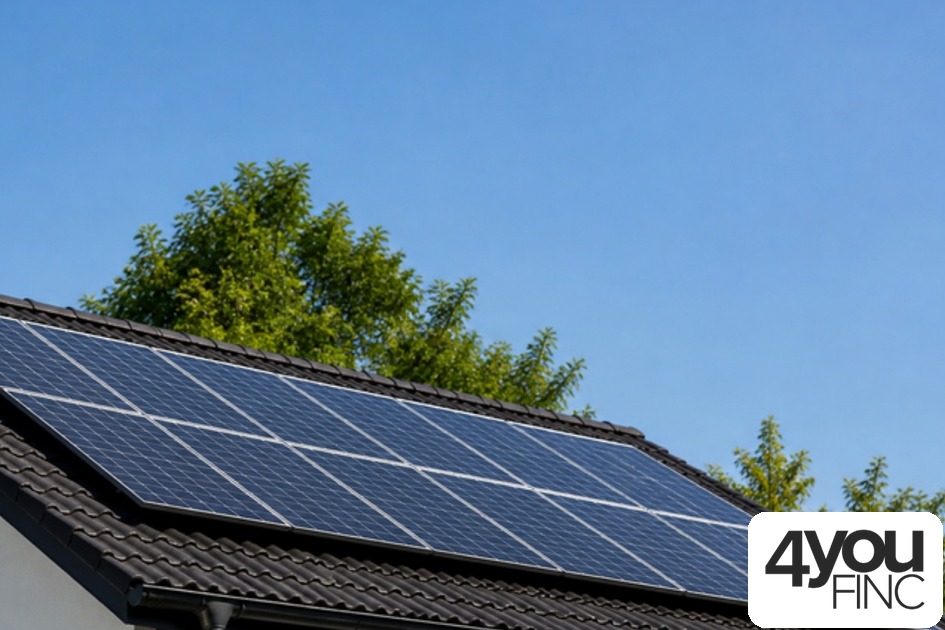
From sunlight to household current: the cells, the inverter and the roof details behind a home solar system.
If you have ever looked at a rooftop covered in dark panels and wondered what is actually happening up there, you are asking the right question before considering a system of your own. Here is how solar panels work in plain terms. According to the U.S. Department of Energy (DOE), sunlight is absorbed by the photovoltaic cells in a panel, which generates electrical charges. Those charges move because of an electric field built into the cell, and that movement is the electricity that flows out of the panel. This guide walks through each step, from the cell to your outlet, and then covers the home factors that decide how well a system performs.
How Solar Panels Work: The Photovoltaic Effect
From Light to Electrical Charge
The process is called the photovoltaic effect. The U.S. Energy Information Administration (EIA) describes a photovoltaic cell as a solid-state device that converts sunlight directly into electricity. Photons are absorbed by a semiconductor material inside the cell. That energy knocks electrons loose, and the freed electrons travel through an external circuit, which is where the usable current comes from.
What the Cell Is Made Of
Most cells use silicon as the light-absorbing layer. The DOE reports that monocrystalline silicon made up 96% of global solar module shipments in 2022, which makes it the most common absorber material, and that cadmium telluride accounts for most of the remaining 4%. In a silicon cell, the absorbing layer releases electrons when it takes in light, and metal contacts collect the resulting current. The DOE also notes that the industry is shifting from a design known as PERC toward n-type designs such as SHJ and TOPCon.
From a Single Cell to a Whole Home
One cell on its own is small. The EIA says an individual cell produces only about 1 to 2 watts, far too little to run a household. To get meaningful power, cells are wired together into weather-resistant panels, and panels are grouped into arrays. More cells or more surface area means more generating capacity, and the EIA notes that arrays can supply enough electricity for an entire home.
Why You Need an Inverter
Solar cells produce direct current (DC), while most of the electricity on the grid is alternating current (AC). The EIA explains that inverters convert DC into AC. When someone asks how solar panels work in a house, the inverter is the answer to the question of how the power gets from the roof into the lights and appliances.
What Affects How Much Power You Get
Efficiency
Conversion efficiency is the fraction of the incoming solar energy that becomes usable electricity, according to the DOE. The EIA says commercial panel efficiency was below 10% in the mid-1980s, around 15% in 2015, and is now close to 25%.
Direction, Tilt and Shade
The EIA notes that fixed panels in the Northern Hemisphere usually face south, tilted at an angle chosen for performance and cost. For homeowners, the DOE guide says panels generally produce the most on south-facing roofs with a tilt of roughly 15 to 40 degrees, and that shade from trees can reduce output. If your roof needs replacing soon, the DOE suggests doing that first.
Check In With Your Own Roof
Take a minute and picture your home. Which way does your main roof face, and is a tree or a neighboring building casting a shadow over it for part of the day? Do you own the roof, or do you rent? Jot down which factor worries you most and bring that question to any installer.
Grid, Batteries and Costs
Net Metering
Many homes stay connected to the grid. The DOE guide describes net metering as an arrangement in which the system owner is credited for solar energy exported to the grid. Eligibility depends on your state and your utility, so the guide advises checking which system sizes and customer types qualify, what the rates are, and how bill credits are calculated. Our article on the smart grid and the future of energy distribution gives useful background on how homes and the grid exchange power.
Batteries, according to the DOE guide, let you use solar energy at night or during an outage, and it advises asking your installer about options. To estimate fit, it suggests the PVWatts tool for a rough figure, then a personalized installer quote, with community solar as an option if your roof is unsuitable or you rent.
A word of caution about federal tax incentives. The IRS page on the Residential Clean Energy Credit describes a credit of 30% of the cost of qualified property installed at a home, covering solar panels, solar shingles and batteries of at least 3 kWh. The credit is nonrefundable, though an unused balance can be carried forward to later years. However, the same IRS page states that the credit does not apply to property placed in service after December 31, 2025. Because tax rules change and your situation is unique, confirm what applies to you with the IRS or a tax professional before counting on any credit.
Panel lifespan and warranty terms vary by product, so ask your installer and the manufacturer for specifics in writing. If you are electrifying more of your home, see how heat pumps heat and cool a home, and for other ways to manage energy costs, see how to reduce your energy bill during cold winters.
What This Means for You
Solar panels turn sunlight into DC electricity through the photovoltaic effect, inverters convert it to AC for your home, and your roof’s direction, tilt, shade and local climate determine how much you get. Net metering and batteries change how you use that power, and the tax credit situation needs a careful check with an official source.
Frequently Asked Questions
How do solar panels work in simple terms?
Photovoltaic cells absorb sunlight, which frees electrons in a semiconductor. An internal electric field moves those charges, producing electricity, and an inverter converts it from DC to AC for household use.
Does solar output change with weather and time of day?
Yes. According to the EIA, production varies with the time of day, location, season and weather.
Is the 30% federal solar tax credit still available?
According to the IRS page, the credit does not apply to property placed in service after December 31, 2025. Confirm your situation with the IRS or a tax professional.
How long do panels last and what does the warranty cover?
This guide does not give numbers for either. Ask your installer and the manufacturer about lifespan and warranty terms before you decide.
This content is for informational purposes only and does not constitute personalized financial advice. Terms and conditions change, so confirm the details with the official provider before making a decision.
Last reviewed: 2026-11-03
Sources consulted:
- https://www.energy.gov/eere/solar/how-does-solar-work
- https://www.eia.gov/energyexplained/solar/photovoltaics-and-electricity.php
- https://www.energy.gov/eere/solar/crystalline-silicon-photovoltaics-research
- https://www.energy.gov/eere/solar/solar-performance-and-efficiency
- https://www.energy.gov/eere/solar/homeowners-guide-going-solar
- https://www.irs.gov/credits-deductions/residential-clean-energy-credit
- https://www.eia.gov/energyexplained/solar/