
What Compound Interest Really Means for Your Savings
Compound interest gets called "the eighth wonder of the world" so often that the phrase has turned into a cliche.
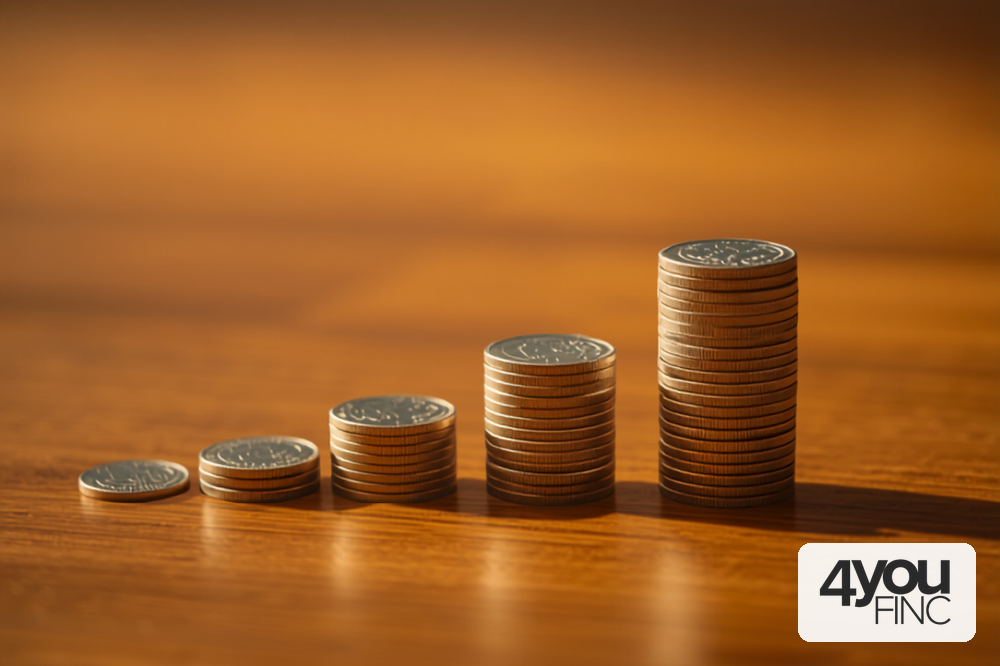
Compound interest gets called “the eighth wonder of the world” so often that the phrase has turned into a cliche. Here’s the thing: the underlying math is genuinely worth understanding, because it explains why starting to save early matters so much more than most people realize when they’re young and retirement feels impossibly far away.
1. The Basic Mechanic
Earning Interest on Your Interest
Simple interest pays you a fixed amount based only on your original deposit. Compound interest pays you based on your original deposit plus every bit of interest you’ve already earned. The short version: your balance grows a little faster every single period, not at a flat rate.
2. Why Time Matters More Than Amount
A Real Comparison
Someone who invests a modest amount starting at age 25 and stops contributing at 35 will typically end up with more money by retirement than someone who invests twice as much per month but doesn’t start until 35. The first person simply gave their money more time to compound, and that head start is extraordinarily difficult to catch up to later, no matter how much extra gets contributed afterward.
This is exactly why financial advisors push the message of starting early so hard, even with small amounts. The dollar amount you start with matters far less than the number of years it has to grow.
The gap widens the longer both people wait to withdraw. In the early years, the two balances might look surprisingly close, since compounding needs time to build real momentum. It’s usually in the last decade or two before retirement that the early starter’s balance visibly pulls ahead, because by then a larger base is compounding at the same rate, producing much bigger dollar gains from the same percentage return.
None of this means starting later is pointless. Someone who begins at 35 instead of 25 still benefits enormously compared to someone who waits until 45. The lesson isn’t “start early or don’t bother.” It’s that every year of delay has a real, calculable cost, so the best time to start is always now, whatever your current age happens to be.
The Rule of 72
A quick way to estimate compound growth is the Rule of 72: divide 72 by your expected annual return to see roughly how many years it takes your money to double. At a 6% return, that’s about 12 years. At 9%, about 8 years.
3. Compound Interest Works Against You Too
The same math that grows a savings account works in reverse on debt. A credit card balance carried month to month compounds against you the same way, which is part of why high-interest debt grows so much faster than most people expect when it’s only paid down at the minimum.
The reversal is what makes credit card debt so much more dangerous than a typical installment loan. A 20% annual rate compounding daily or monthly on a growing balance can outpace almost anything a normal savings account earns, which is why paying off high-interest debt is often a better use of extra cash than investing it, at least until that balance is cleared.
This is also why minimum payments are structured the way they are. A minimum payment on a large balance often covers little more than the interest that accrued that month, leaving the principal nearly untouched. The balance can sit for years without shrinking in any meaningful way, even while payments are made faithfully every month.
4. Making Compounding Work in Your Favor
Automate Contributions
Set up automatic, regular contributions to a savings or retirement account, and you’re consistently feeding the compounding process without having to remember or decide to do it every month.
Automation also removes the temptation to skip a month when money feels tight. The contribution happens before you have a chance to talk yourself out of it, and over a decade or two that consistency matters more than any single deposit.
Reinvest, Don’t Withdraw
Dividends or interest paid out along the way compound fastest when they’re reinvested rather than withdrawn. Withdraw them, and you reset part of the growth back to a flat, non-compounding baseline.
The Bottom Line
Compound interest rewards time more than almost any other factor in personal finance. Starting small but starting early consistently outperforms waiting to start big later. That makes the first contribution, however modest, more important than most people give it credit for.
The same principle cuts both ways, so treating high-interest debt with the same urgency as a savings goal is just as important as automating a contribution.


